Are you looking for ways to optimize and expand your production without losses?
will become the core of production for those who value quality, time and money.
is a professional software for simulating foundry processes.
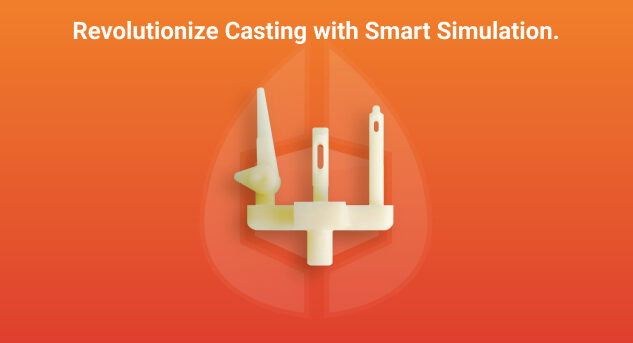
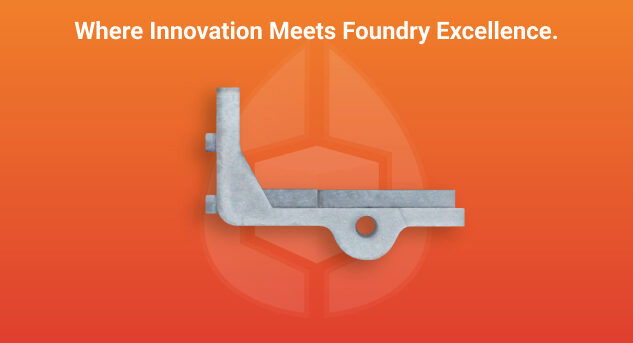
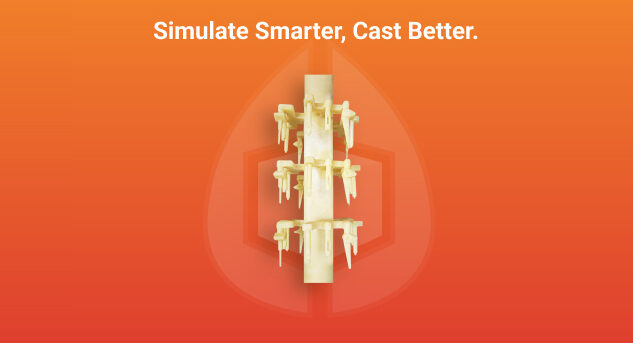

USECAT is an integrating system that allows modeling and optimizing the processes of manufacturing models, ceramic molds, and directly melting and pouring. Our system analyzes the causes of defects and therefore unplanned costs.
Such a structure allows building a self-setting production system based on AI.
Other casting methods are no exception for USECAT.
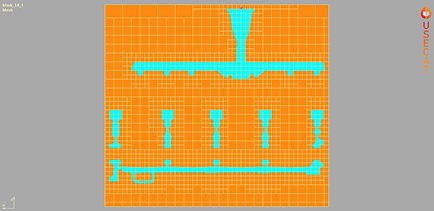
There is the possibility to change mesh splitting of the casting layout repeatedly during the whole simulation process. In simulation the system will automatically switch from one mesh to another. Criteria for switching are set in the module.
Irregular mesh combined with multi mesh simulation of the part filling and solidification. With this function there is a possibility to set more coarse mesh in the mold than in the casting. In the appeared window set a level of mold cells merger.
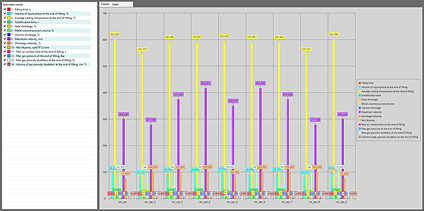
The criterion based evaluation makes it easier to select the best method for production based on a set of used definable (within limits) criteria. USECAT then indicates whether a simulation meets the criteria or not in a tabular form. By looking at the criteria for a simulation is makes it possible to exclude production methods just by looking if my criteria have been fulfilled or not.
For evaluation of simulation results it is necessary to perform simulation of several files with different parameters in the autosimulation mode. Then the simulation results are gathered into the table for analysis.
Autosimulation provides the opportunity to calculate several files from the list of files for simulation. This is a very useful function when you want to test several setups for the same casting, for example different feeders or different temperatures for the alloy or the mould/cores.
Special Offer for non-commercial companies and Universities.
USECAT is committed to the development of a responsible foundry industry.
Our goal is to help educate and inspire with our products, innovation and dedication.
Contact us
One year Virtual Upgrade Agreement for free upgrade of the Software and services from the USECAT Developers.
If you already own the software, but it is not enough for you.
If you need technical support again.
If you want to get an update and access to the latest software developments.
Contact us
Solidification and cooling induce stresses in the casting, which are released or redistributed during mold knockout. Residual stresses can weaken the part or lead to deformation.
Minimizing porosity also helps ensure that the part’s tensile strength is maximized. With simulation, engineers can predict what heat treatments a finished part may need to ensure optimal mechanical performance.
Contact us
Solidification simulation starts with a full mould of metal. Simulation takes into account both the gravitation and phase conversions.
In foundry process simulations, solidification is a key phase that requires careful analysis. Solidification modeling involves scrutinizing how the solidification pattern behaves and if liquid isolated pockets are created. This process is essential as it influences the final structure, quality, and performance of the cast part.
Simulation can predict areas of the casting that solidify first, and those that solidify last, helping to identify potential hot spots and shrinkage porosity defects.
Contact us
It is designed as a practical tool to analyse only how the mould filling occurs. The influence of heat flow on the mould is not taken into account in this simulation. The flow simulation allows you to study the consequences of different gating system designs and to study the filling sequence in the casting cavity. The possibility to simulate mould filling often reveals what really happens and gives new knowledge about pouring. Many casting defects orginates from bad gating design.
It includes the heat flux both in the metal and in the mould during filling. The simulation stops when the mould is completely filled.
Contact us
Simulates most commercial casting methods, such as gravity sand and permanent mold, low pressure die casting, high pressure die casting, tilt pouring, counter gravity casting, centrifugal casting and investment casting.
Casting materials possible for simulation gray- and ductile iron, steel alloys, aluminum alloys, copper-, zinc and magnesium-based alloys, super alloys like nickel or chrome-based and titanium.
All types of mold and core materials commercial on the market and also exothermic materials, chills and both foam and extruded filters maybe used in simulation. The meshing method enables the simulation of real extruded filters and also can deal with foam filters if the 3D models existed.
Contact us